

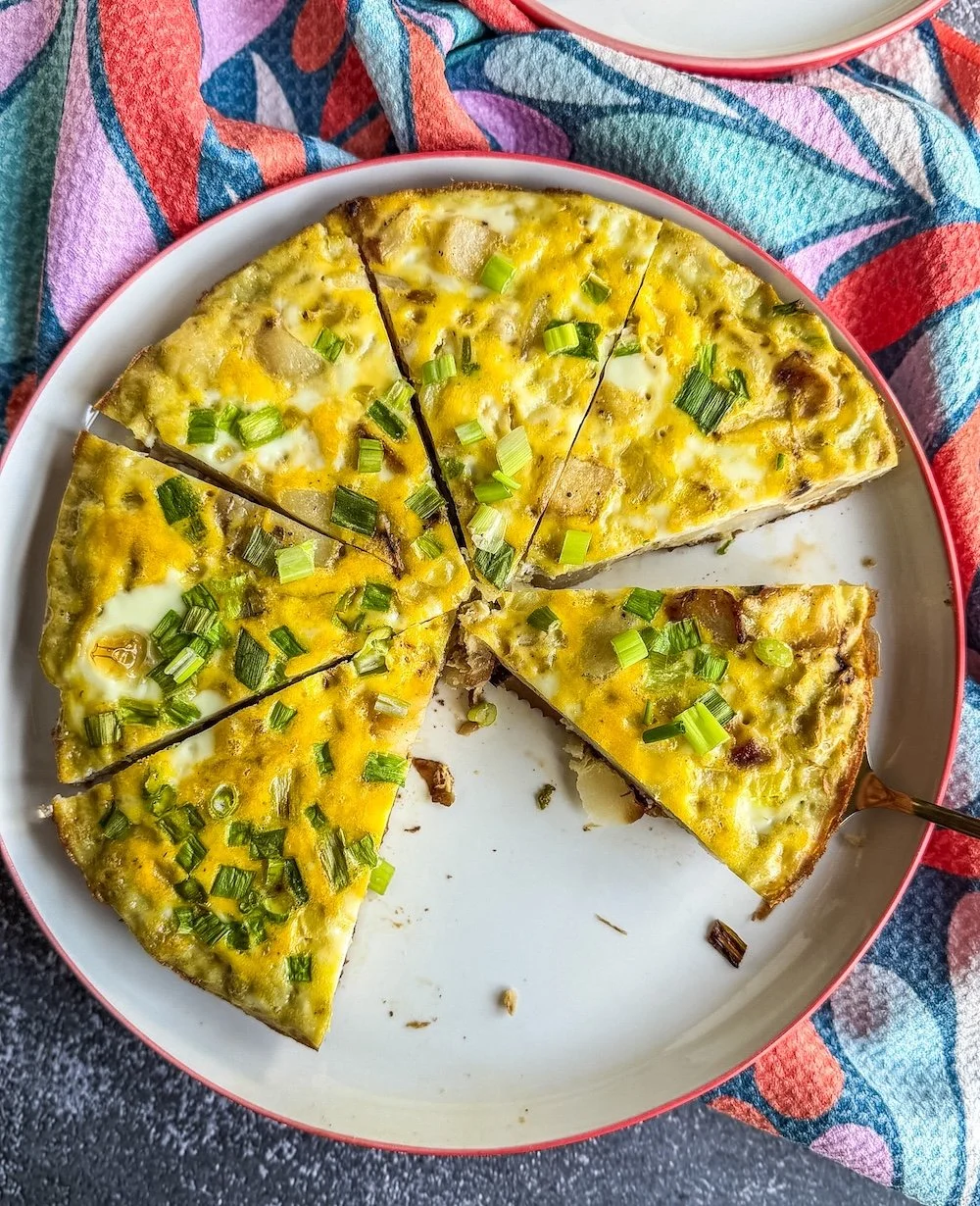
Makes: 8 slices
75 calories | 7g protein
If you've ever been to Spain, you've probably had a Spanish omelette, also known as tortilla española or tortilla de patatas. It's a simple but incredibly delicious dish made with eggs, potatoes, and, depending on who you ask, onions. I recently visited San Sebastián, Spain, where I ate a slice of Spanish omelette almost every single day. And honestly, I could have kept going.
When I got home, I knew I wanted to recreate it, but with a little more protein and a slightly easier cooking method. This high-protein Spanish omelette combines whole eggs, egg whites, potatoes, yellow onion, and green onion for a simple, satisfying dish that's naturally dairy-free and vegetarian.
And before anyone comes for me about the onions, I know they're controversial. Whether or not onions belong in a traditional Spanish omelette is apparently a very serious debate in Spain. But I really don't care because I love onions with eggs and potatoes, so we're using them.
The other thing you should know is that a traditional Spanish omelette is cooked on the stovetop and flipped to cook both sides. Ask me how many times I tried flipping mine before deciding that wasn't happening. Instead, we're finishing this Spanish omelette in the oven, which makes the whole process significantly easier and eliminates the risk of your beautiful omelette falling apart halfway through cooking.
The result is a tender, flavorful potato and egg omelette that you can slice into wedges and enjoy for breakfast, lunch, or a quick high-protein snack.
What Is a Spanish Omelette?
A Spanish omelette, or tortilla española, is one of Spain's most recognizable dishes. Unlike the folded omelettes we're used to eating in the United States, a Spanish omelette is a thick, round dish made primarily with eggs and potatoes. It's cooked until it holds its shape and is typically served in slices or wedges.
You'll find Spanish omelettes throughout Spain, including in tapas bars, cafés, and restaurants. In San Sebastián, they're especially popular as pintxos, the small bites of food that the city is famous for. Some versions are completely set in the center, while others have a softer, creamier interior.
Traditionally, the potatoes are cooked in a generous amount of olive oil until tender before being combined with beaten eggs. The mixture is then cooked in a skillet and flipped using a plate to finish cooking the other side.
My version takes a slightly different approach. Instead of cooking the potatoes in a substantial amount of oil, I use frozen diced potatoes and avocado oil spray. I also replace some of the whole eggs with liquid egg whites to increase the protein relative to the calories.
And rather than attempting the infamous flip, I finish the omelette in the oven. It's not the most traditional method, but it's approachable, requires less hands-on cooking, and still gives you a delicious Spanish-inspired potato omelette.
Why You'll Love This High-Protein Spanish Omelette
One of my favorite things about Spanish omelettes is how simple the ingredients are. You really don't need anything fancy to make something delicious. Eggs, potatoes, onions, and a few seasonings come together to create a dish that's hearty, comforting, and surprisingly versatile.
This version is particularly convenient because it uses frozen diced potatoes, which means there's no peeling or chopping potatoes involved. It's also naturally gluten-free when made with gluten-free ingredients, dairy-free, and vegetarian, making it a great option for different dietary preferences.
Adding egg whites is an easy way to increase the protein without significantly increasing the calories. You still get the flavor and richness from the whole eggs, but the additional egg whites make the recipe a little more protein-forward.
It's also great for meal prep. You can make the entire omelette at once, let it cool, and slice it into individual portions to enjoy throughout the week. And while I love it warm, Spanish omelettes are also commonly eaten at room temperature, which makes them especially convenient.
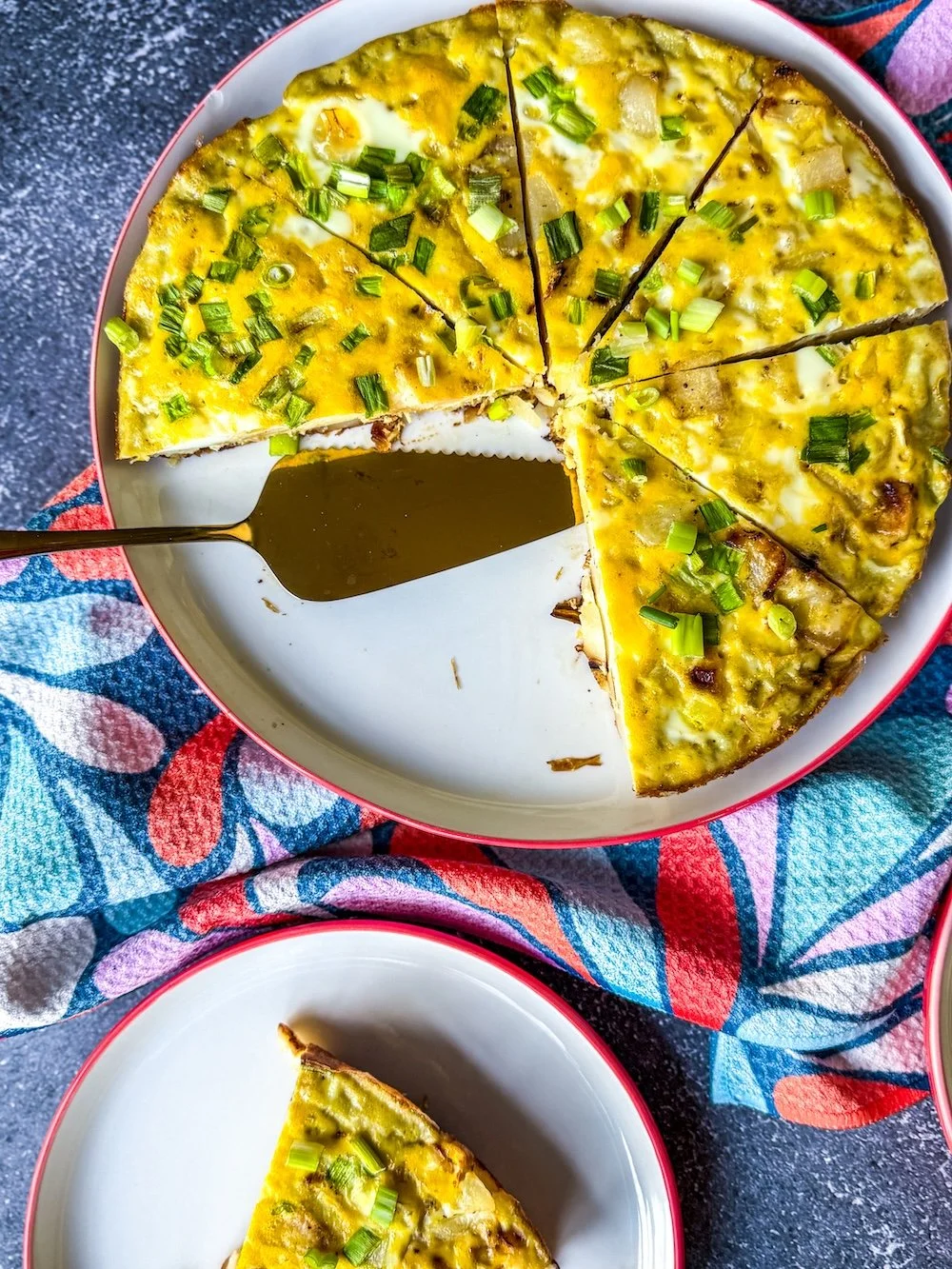
Ingredients You'll Need
Whole eggs: Whole eggs create the base of the omelette and contribute richness, flavor, and structure. I like keeping whole eggs in the recipe rather than using only egg whites because the yolks help give the omelette a more satisfying texture.
Liquid egg whites: This is my little high-protein modification. Adding egg whites increases the protein content without adding as many calories as using additional whole eggs would. It also helps create a substantial omelette that can be sliced into multiple servings.
Frozen diced potatoes: I used frozen potato cubes to make this recipe as easy as possible. You can absolutely use fresh potatoes, but frozen potatoes save time and eliminate the need to peel and dice them yourself. Just make sure they're cooked through and tender before adding the eggs.
Yellow onion: The controversial ingredient! I personally think onions and potatoes belong together, especially when eggs are involved. The yellow onion softens as it cooks and adds a slightly sweet, savory flavor that complements the potatoes.
Green onion: I also like adding chopped green onion for a little extra onion flavor and freshness. It gives the omelette a nice pop of color, too.
Avocado oil spray: Instead of using a large amount of oil to cook the potatoes, I use avocado oil spray to lightly coat the skillet. This helps prevent sticking while keeping the added fat relatively low.
Salt, pepper, and garlic powder: You don't need a complicated seasoning blend for this recipe. Salt brings out the flavor of the potatoes and eggs, while black pepper and garlic powder add a little extra savory flavor.
How to Make a Spanish Omelette Without Flipping It
The easiest way to make this high-protein Spanish omelette is to start it on the stovetop and finish it in the oven. This allows you to cook the potatoes and onions first, then gently bake the eggs until they're set without having to flip the entire omelette.
Start by preheating your oven to 350°F (175°C). You'll also want to use an oven-safe, nonstick skillet, preferably around 10 inches in diameter. A smaller skillet will create a thicker omelette, while a larger skillet will produce a thinner one and may require less baking time.
Lightly spray the skillet with avocado oil and place it over medium heat. Add your frozen diced potatoes and sauté until they're heated through, tender, and beginning to develop a little color. If the potatoes release moisture as they thaw, allow that moisture to evaporate before moving on. You don't want excess water sitting in the skillet when you add the eggs.
Once the potatoes are mostly tender, add the chopped yellow onion and continue cooking until the onion softens and becomes slightly translucent. Season everything with salt, pepper, and garlic powder.
While the potatoes and onions cook, whisk together the whole eggs and liquid egg whites in a separate bowl until completely combined.
Once the potato mixture is ready, spread it evenly across the skillet and pour the beaten eggs over the top. Gently distribute the mixture so the potatoes are evenly coated, then sprinkle the chopped green onions over everything.
Transfer the uncovered, oven-safe skillet to your preheated oven and bake for approximately 20–30 minutes, or until the eggs are set in the center. The exact time will depend on the size of your skillet, the thickness of your omelette, and how much the eggs cook before the pan goes into the oven.
You'll know it's ready when the center no longer looks liquid and the omelette has set enough to hold its shape. Avoid overbaking it, since the eggs can become rubbery if cooked for too long.
Remove the skillet from the oven and allow the omelette to cool for about 5–10 minutes before carefully loosening the edges and transferring it to a plate or cutting board. Slice it into wedges and enjoy!
Why I Bake My Spanish Omelette Instead of Flipping It
If you've ever watched someone make a traditional Spanish omelette, you know the flip is a pretty important part of the process. Typically, the cook places a large plate over the skillet, flips the entire omelette onto the plate, and then slides it back into the pan to cook the other side.
It looks easy when someone who's made hundreds of Spanish omelettes does it.
When I tried? Not so much.
After several failed attempts, I decided there was absolutely no reason I needed to keep doing this when I could just put the skillet in the oven.
Baking the omelette allows the eggs to cook more evenly without having to disturb the potato mixture. It's especially helpful when you're using a combination of whole eggs and egg whites, since the additional liquid can make the omelette more delicate before it sets.
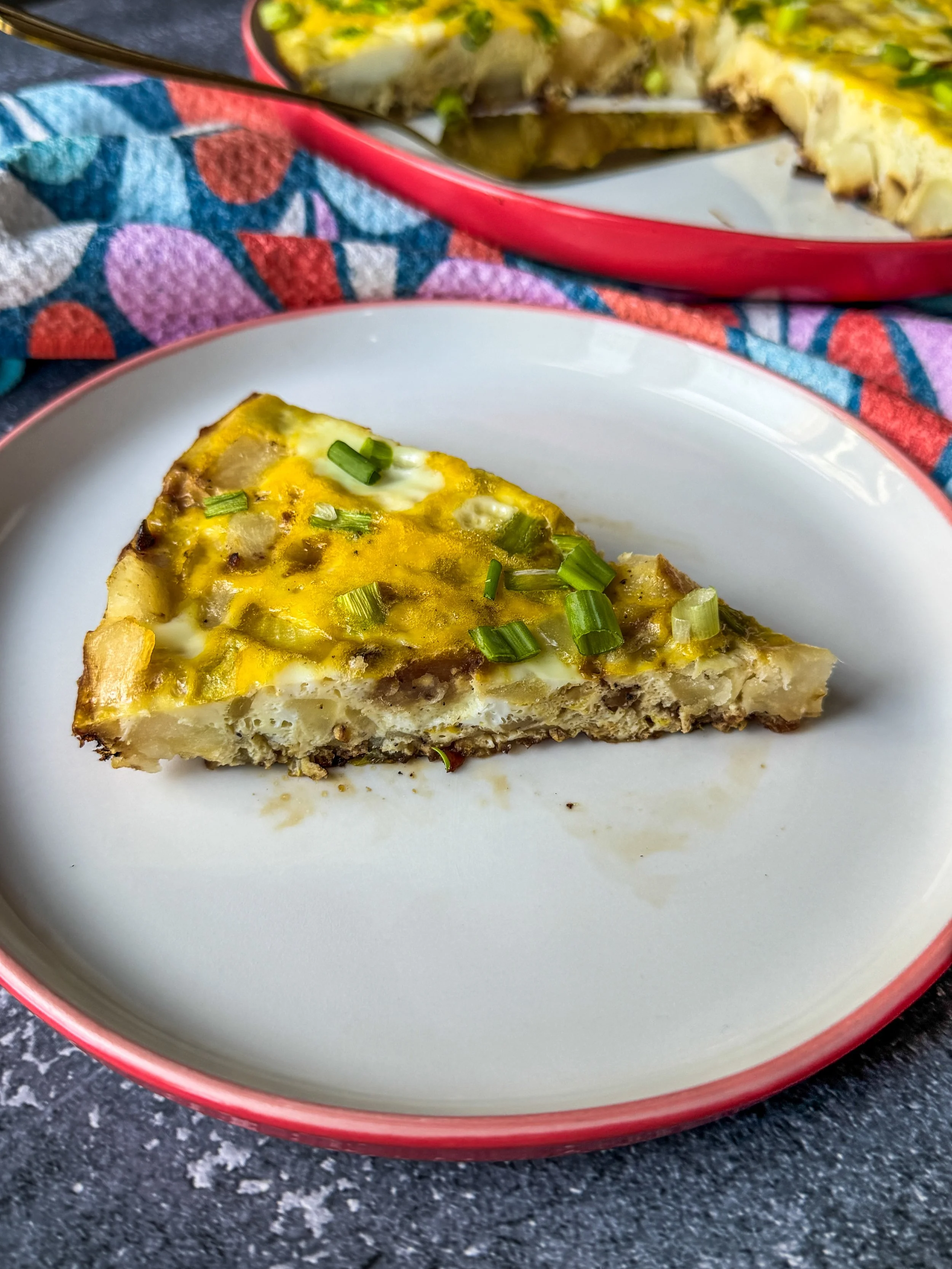
The biggest difference is the texture. A traditional Spanish omelette can have a particularly soft, custardy center, depending on how it's cooked. Baking tends to create a more evenly set interior, which is ideal if you want to slice the omelette neatly or prepare it ahead of time.
If you prefer a softer center, start checking the omelette earlier rather than automatically baking it for the full time.
Tips for Making the Best Baked Spanish Omelette
Although this recipe is simple, a few small details can make a big difference in the finished texture.
First, make sure your potatoes are fully tender before adding the eggs. The oven is primarily finishing the egg mixture, so you don't want to rely on it to cook potatoes that are still hard in the center. This is particularly important when using frozen diced potatoes, since the size and cooking instructions can vary between brands.
Second, give the onions enough time to soften. Adding raw onions directly to the egg mixture can leave you with a sharper onion flavor and a less cohesive texture. Sautéing them with the potatoes allows their flavor to mellow and blend into the omelette.
I also recommend using a well-greased, oven-safe nonstick skillet. Even though you're baking the omelette, you still need to be able to remove it from the pan without destroying the shape. Make sure the skillet's handle is oven-safe at the temperature you're using.
Finally, let the omelette rest before cutting it. Giving the eggs a few minutes to cool helps the structure firm up so you can slice it into clean wedges rather than having it fall apart.
Is a Spanish Omelette Healthy?
A Spanish omelette can absolutely be part of a balanced diet. It's made primarily from eggs and potatoes, which provide a combination of protein, carbohydrates, and other nutrients.
Eggs provide high-quality protein, along with nutrients such as choline and vitamin B12. Potatoes contribute carbohydrates for energy, as well as potassium and vitamin C, although the exact nutrient content depends on how they're prepared.
Traditional Spanish omelettes can contain a substantial amount of olive oil because the potatoes are often cooked in oil before being mixed with the eggs. There's nothing inherently wrong with that, but using avocado oil spray is an easy way to reduce the amount of added fat if you're trying to keep the recipe lower in calories.
My version also incorporates liquid egg whites, which increases the amount of protein without requiring more whole eggs.
Ultimately, whether a food is healthy depends on your overall dietary needs and eating patterns. But if you're looking for a simple, satisfying, protein-forward meal made with familiar ingredients, this baked Spanish omelette is a great option.
How to Store and Reheat Spanish Omelette
One of the reasons I love making Spanish omelettes is that they're just as convenient for meal prep as they are for eating immediately.
Once the omelette has cooled, slice it into individual portions and store them in an airtight container in the refrigerator for up to 3–4 days.
You can enjoy Spanish omelette cold, at room temperature for a short period, or reheated. If you're reheating it, I recommend using the microwave in short intervals until heated through. You can also warm individual slices in a covered skillet over low heat.
Just be careful not to overheat it, since the eggs can become dry or rubbery.
For an easy breakfast, pair a slice with fresh fruit or toast. You can also enjoy it alongside a simple salad for lunch, or eat a slice on its own as a savory snack.
Nutrition Information (Per Serving - makes 8 hearty slices)
Calories: 75
Protein: 7g
Carbs: 6g
Fat: 3g
FAQs
-
A traditional American-style omelette is usually folded around fillings such as cheese, vegetables, or meat. A Spanish omelette is a thick, round dish made with eggs and potatoes, often with onions, and is typically served in slices or wedges rather than folded.
-
This is a surprisingly controversial topic in Spain! Some people strongly prefer tortilla española with onions (con cebolla), while others insist it should be made without them (sin cebolla). Both versions are common. Personally, I love the flavor onions add, so my recipe includes both yellow onion and green onion.
-
Absolutely. I used frozen diced potatoes because they're convenient and eliminate the need for peeling and chopping. Just sauté them until they're completely tender and any excess moisture has evaporated before adding the eggs.
-
If your omelette falls apart when you try to remove it from the skillet, the eggs may not have set completely, or you may be trying to remove it while it's still too hot. Make sure the center is cooked and allow the omelette to rest for several minutes before transferring it to a plate.
-
Yes. This recipe contains no milk, cheese, butter, or other dairy ingredients. It's also vegetarian, although it does contain eggs.
-
Yes. This is a great meal-prep recipe because it can be sliced into individual servings and stored in the refrigerator. It's delicious reheated and can also be enjoyed cold, making it convenient for busy mornings or quick snacks.
Final Thoughts
After eating Spanish omelette almost every day during my trip to San Sebastián, I knew I had to recreate it at home. And while my high-protein Spanish omelette isn't exactly traditional, it has everything I loved about the original: tender potatoes, flavorful onions, and perfectly cooked eggs.
Using frozen potatoes makes prep incredibly easy, adding egg whites gives it a little extra protein, and finishing it in the oven means you don't have to worry about flipping the entire thing (because trust me, I tried). It's simple, satisfying, naturally dairy-free and vegetarian, and perfect for making ahead for an easy breakfast, lunch, or snack.
Whether you're already a fan of tortilla española or trying a Spanish omelette for the first time, I hope you love this easy, high-protein version as much as I do. And if you're on team no onions, we'll just have to agree to disagree!
Love Easy High-Protein Recipes?
If you loved this recipe, you'll love my cookbook!
Inside, you'll find over 100 high-protein recipes that make hitting your protein goals simple, delicious, and realistic. From easy breakfasts and meal-prep lunches to healthy desserts and family-friendly dinners, every recipe is designed to help you eat more protein without spending hours in the kitchen.
Whether you're trying to lose weight, build muscle, or simply eat healthier, these are the recipes I make week after week.
→ Grab your copy of my cookbook here.
Ready to Lose Your First (or Next) 10 Pounds?
If you love recipes like this but still feel stuck when it comes to actually losing weight, my PSQ 0–10 lbs Weight Loss Guide was made for you.
Inside this 12-week program, I'll teach you the same high-protein, evidence-based approach I use with my coaching clients to lose fat without cutting out the foods you love. You'll learn how to build satisfying meals, calculate the right calorie target for your body, prioritize protein to stay full, and finally understand why what you're doing works.
The guide includes:
A complete 12-week fat loss roadmap
30 high-protein recipes
Meal planning templates
Grocery lists
Progress trackers
Gluten-free and dairy-free swaps
A dedicated section on perimenopause and menopause
Simple macro education without the overwhelm
If you're tired of starting over every Monday and want a realistic plan you can actually stick with, this guide is the perfect place to start.

High-Protein Spanish Omelette (Easy Baked Tortilla Española)
One of my favorite things about traveling is coming home inspired to recreate foods I loved along the way. And after eating Spanish omelette almost every day in San Sebastián, there was no way I wasn't making my own version.
Is this the most traditional tortilla española you'll ever find? Probably not. I'm using egg whites, frozen potatoes, avocado oil spray, and an oven instead of flipping it in a skillet. And yes, I'm putting onions in it.
But it's simple, delicious, higher in protein, and easy enough to make regularly, which is exactly what I want from a recipe.
If you're looking for an easy high-protein breakfast, a vegetarian meal-prep option, or a way to bring a little Spanish-inspired cooking into your kitchen, give this baked Spanish omelette a try.
Ingredients
- 4 large eggs
- 1 cup liquid egg whites
- Frozen diced potatoes (see recipe note)
- 1/2 yellow onion, chopped
- 2 sprigs green onion, chopped
- Avocado oil spray
- Salt, to taste
- Black pepper, to taste
- Garlic powder, to taste
Instructions
- Preheat the oven to 350°F (175°C). Lightly coat an oven-safe, nonstick skillet with avocado oil spray.
- Place the skillet over medium heat and add the frozen diced potatoes. Sauté until heated through, tender, and any excess moisture has evaporated, approximately 8–12 minutes depending on the size of the potatoes.
- Add the chopped yellow onion and continue sautéing for another 3–5 minutes, until softened. Season with salt, pepper, and garlic powder.
- In a separate bowl, whisk together the whole eggs and liquid egg whites until completely combined.
- Spread the potatoes and onions evenly across the skillet, then pour the egg mixture over the top.
- Sprinkle the chopped green onions evenly over the eggs.
- Transfer the uncovered skillet to the preheated oven and bake for approximately 20–30 minutes, or until the eggs are set in the center.
- Carefully remove the skillet from the oven and allow the omelette to cool for 5–10 minutes.
- Loosen the edges, carefully transfer the omelette to a plate or cutting board, and slice into individual servings.
- Serve warm or allow to cool and refrigerate for meal prep.
Notes
Potatoes: Frozen diced potatoes make this recipe especially convenient, but fresh diced potatoes can also be used. Cook them until tender before adding the eggs.
No flipping required: Baking the omelette eliminates the need to flip it on the stovetop and helps the eggs set evenly.
Texture: For a softer omelette, check for doneness toward the beginning of the suggested baking window.
